
How to Delete Instagram Account UK
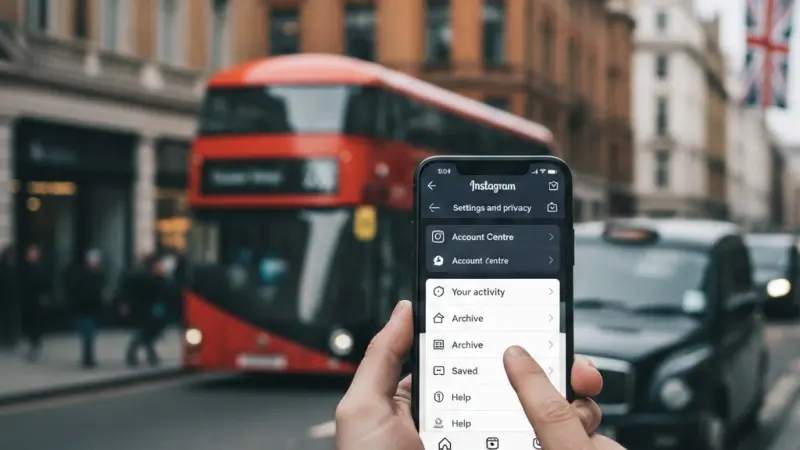
How to Delete Instagram Account UK: A Strategic Guide for Businesses
Published: 14 February 2026 | Author: LocalPage.uk Content Architecture Team | Region: United Kingdom
In the rapidly evolving digital landscape of 2026, many UK small businesses are reassessing their social media footprints. Whether due to shifts in platform efficacy, concerns regarding data privacy under the UK General Data Protection Regulation (UK GDPR), or a strategic pivot toward more focused marketing channels, the decision to remove an Instagram presence is increasingly common. This guide provides a comprehensive, professional roadmap for UK businesses looking to permanently delete or temporarily deactivate their Instagram presence while safeguarding their brand reputation and historical data.
76% of UK consumers research local businesses online before purchasing (Ofcom, 2025). Ensuring your digital exit is as professional as your entrance is vital for maintaining long-term trust.
Strategic Considerations Before Closing Your Instagram Presence
Evaluating the Impact on Your UK Digital Footprint
Before proceeding with deletion, a business must evaluate how its Instagram account integrates with its wider UK online presence. Instagram often serves as a primary touchpoint for discovery, particularly for hospitality and retail sectors in major hubs like London, Manchester, and Glasgow. Removing this channel without a redirect strategy can lead to "broken" links in your Google search results, which may negatively impact your SEO. It is prudent to consider whether your target audience in specific regions—such as the 94% of micro-enterprises in Wales that rely heavily on local community engagement—will still find you easily via other means.
Temporary Deactivation vs Permanent Deletion
Instagram offers two distinct paths: deactivation and deletion. Deactivation is a "soft" exit where your profile, photos, comments, and likes are hidden but not removed. This is often the preferred route for UK businesses undergoing a rebrand or a seasonal hiatus. Permanent deletion, conversely, is an irreversible process that erases all data after a 30-day grace period. For businesses regulated by the Financial Conduct Authority (FCA) or those handling sensitive client data, deactivation might offer a safer middle ground while you finalise data archiving requirements.
Legal Data Retention Requirements for UK Businesses
UK businesses should be aware that while an account is deleted from Instagram, your internal records of social media interactions may need to be retained for compliance. Under UK tax law, HMRC requires business records to be kept for at least six years. If your Instagram account was used for direct sales or significant customer service resolutions, ensure you have an offline backup before hitting the delete button.
Professional Pre-Deletion Checklist: Securing Your Business Assets
Archiving Your Brand’s Digital History
Your Instagram account contains years of creative assets, captions, and customer interactions. Before deletion, use the "Download Your Information" tool provided by Meta. This is not just a sentimental move; it is a strategic one. These assets can be repurposed for your website or other platforms. In Scotland, where Scottish Enterprise emphasizes digital resilience, having a robust backup of all marketing collateral is considered a best practice for SMEs.
Notifying Your UK Customer Base
Sudden disappearance can be interpreted by customers as a business failure. A professional exit involves informing your followers. Post a final "grid" image or a series of stories explaining that you are moving your primary communications to your website or a newsletter. Direct your customers in Northern Ireland, England, and beyond to your official GOV.UK-registered business address or your primary contact email to ensure continuity of service.
Redirecting Traffic to Your Primary UK Website
Update your bio link one last time to point toward a specific landing page on your website that explains the change. This ensures that any residual traffic from old tags or mentions is captured. This is particularly important for businesses in the professional services sector, which makes up 22% of all UK businesses, where trust and accessibility are paramount.
The Step-by-Step Process: Deleting via Desktop and Mobile
Navigating the Meta Accounts Centre
As of 2026, the deletion process is centralized within the Meta Accounts Centre. For UK business owners, navigating this requires administrative access to the professional account. Log in via a secure connection—ideally not on public Wi-Fi—to protect your business credentials. This process is uniform across the UK, whether you are operating from a home office in rural Wales or a corporate suite in the City of London.
Final Confirmation and the 30-Day Cooling-Off Period
Once the request is submitted, Instagram will hide your account immediately. However, the data remains on Meta’s servers for 30 days. During this period, if you log back in, the deletion request is cancelled.
This "cooling-off" period is a safety net but requires discipline. Ensure that any automated posting tools (like Hootsuite or Buffer) are disconnected to prevent accidental logins that might trigger a reactivation.
Pro Tip: Before finalising deletion, check if your Instagram is linked to a Business Facebook Page or a WhatsApp Business account. Deleting the Instagram account may affect cross-platform features that your team relies on for customer service in regions with high WhatsApp usage, like the West Midlands.
Managing Integrated Third-Party Apps and UK GDPR
Revoking API Permissions and Access
Many UK businesses use third-party apps for analytics, scheduling, or "Link in Bio" services. Even after you delete your Instagram account, these third parties may still hold tokens or permissions to access your data. Visit the 'Apps and Websites' section in your settings prior to deletion to revoke all active sessions. This aligns with the ICO’s "Data Minimisation" principle, ensuring you aren't leaving digital backdoors open to your business data.
Fulfilling Subject Access Requests (SARs) Post-Deletion
If a customer in the UK has interacted with you on Instagram, they have the right to request their data under UK GDPR. If you have deleted the account and the 30-day period has passed, you may no longer have access to these messages. It is vital to have your data archive (downloaded in the previous step) organized so you can still respond to legitimate legal requests from the Information Commissioner’s Office (ICO) or individuals.
Transparency and Privacy Policy Updates
Your company’s privacy policy should be updated to reflect that you no longer use Instagram as a data processing channel. This maintains transparency for your UK clients and keeps you compliant with current privacy regulations. Businesses in Northern Ireland should also consider if this change affects any cross-border data flows with the Republic of Ireland, as per the Windsor Framework's nuances.
Handling Multiple Accounts and Regional Sub-Brands
Consolidating Regional Instagram Presences
Many larger UK SMEs operate multiple accounts—for example, "@BrandLondon" and "@BrandEdinburgh". If the goal is consolidation rather than total exit, you might choose to delete regional accounts and merge the followers’ attention to a single "@BrandUK" profile. While you cannot "merge" accounts in a literal sense, the deletion of sub-brands should be timed with a heavy promotional push toward the main account.
Managing Shared Access Amongst Staff
In a professional setting, multiple staff members often have access. Before deletion, ensure all team members are informed and that "Two-Factor Authentication" (2FA) codes are not tied solely to a departing employee's phone number. This avoids a scenario where you are locked out of your own account just as you are trying to close it down.
There are over 5.6 million private sector businesses in the UK. Managing digital assets efficiently is a hallmark of the most successful 0.7% that scale beyond micro-business status.
Addressing the "Shadow" Presence: Tags and Mentions
Monitoring User-Generated Content After Deletion
Deleting your account removes your content, but it does not remove photos others have posted of your business. In the hospitality sector, where 190,000 UK premises often rely on "Instagrammable" moments, your brand will live on through customer tags. While you can no longer control the "official" narrative, you can monitor these mentions through general social listening tools to ensure your reputation remains intact in local communities.
Updating Physical Marketing Material
UK businesses often have Instagram handles printed on menus, business cards, vehicle wraps, and shop signage. This is especially true for the 385,000+ construction and trade businesses where physical branding is a primary lead generator. A comprehensive deletion plan must include an audit of physical assets. It is better to have no social media icon than to direct a potential client in the South West or the Midlands to a "User Not Found" page.
Removing Social Widgets from Your Website
Ensure your web developer removes the Instagram icon from your website footer and header. Leaving a dead link is a poor user experience.
According to 2025 digital trends, 68% of customers trust businesses more when their website is clean, functional, and up-to-date.
Alternative Digital Strategies for UK Businesses in 2026
Pivoting to High-Intent Search Channels
With 82% of UK adults owning a smartphone, local search is more powerful than ever. Businesses leaving Instagram often find a higher Return on Investment (ROI) by focusing on Google Business Profiles or local directories like LocalPage.uk. These platforms cater to "high-intent" users—people specifically looking for a service in their area, whether that's a plumber in Cardiff or an accountant in Belfast.
Building Owned Media via Email Marketing
Unlike Instagram, where an algorithm controls your reach, an email list is an "owned" asset. UK businesses are increasingly moving toward newsletters to maintain direct contact with their audience. This bypasses the volatility of social media platforms and provides a more stable foundation for long-term growth, particularly for the 532,000 professional services firms in the UK.
The Financial Implications of Closing Social Channels
Reducing Hidden Operational Costs
Managing a professional Instagram presence is not "free". It requires time, content creation, and often paid advertising spend. By deleting an underperforming account, a UK SME can reallocate these resources toward more profitable activities. For a micro-business in Wales or Northern Ireland, saving 5 hours a week on social media management can equate to thousands of pounds in recovered labour costs over a year.
Evaluating Paid Ad Accounts and Billing
Before deletion, check your Meta Ads Manager. Ensure all outstanding invoices to Meta are settled. HMRC will require records of these marketing expenses for your tax returns. If you have an active "Direct Debit" or stored credit card with Meta, ensure it is removed or the account is properly closed to prevent ghost charges after the Instagram handle is gone.
Voice Search & Quick Assistance
"How do I delete my business Instagram account in the UK?"
To delete your business Instagram, go to the Meta Accounts Centre via your settings, select 'Personal Details', then 'Account Ownership and Control', and choose 'Deactivation or Deletion'. Ensure you have downloaded your data first for UK GDPR compliance.
"Can I get my Instagram username back after deleting it?"
Once the 30-day deletion period ends, your username becomes available again. However, there is no guarantee you can
reclaim it, as another user or business in the UK or elsewhere could register it immediately.
Final Checklist for a Professional Exit
Before you take the final step, review this summary to ensure your UK business is protected:
- Data Archive: Have you downloaded your Meta data for HMRC/ICO compliance?
- Customer Notice: Have you posted a final update directing followers to your website?
- Link Audit: Have you removed Instagram links from your email signature and website?
- Third-Party Apps: Have you revoked access for scheduling and analytics tools?
- Physical Branding: Is there a plan to update signage or business cards?
Frequently Asked Questions
Will deleting Instagram affect my Facebook Business Page?
Not necessarily. While they are both managed under the Meta Accounts Centre, they are separate entities. However, any "cross-posting" features or integrated ad campaigns will cease to function. It is important to unbind the accounts in your settings before deletion if you intend to keep your Facebook presence active for your UK customers.
How long does it take for my profile to disappear from UK Google results?
Instagram will hide your profile immediately upon your request. However, Google’s search index may show a "cached" version of your page for several weeks. You can use Google Search Console to request a removal of outdated content, which is helpful for maintaining a clean digital presence for your UK brand.
What is the safest way to store my Instagram data for HMRC?
HMRC requires records to be "legible". The JSON or HTML files provided by Meta’s download tool are acceptable. We recommend storing these on a secure, encrypted UK-based cloud service or a physical drive kept at your registered office address in England, Scotland, Wales, or Northern Ireland.
Can I delete an account if I’ve lost the password?
No, you must be able to log in to delete the account. If you have lost access, you must use the 'Forgot Password' flow. If the account was set up by a former employee, you may need to provide business identification to Meta to regain control before you can proceed with closure.
Is there a cost to delete a professional Instagram account?
No, Meta does not charge for deleting or deactivating accounts. However, ensure all your UK advertising bills are paid, as Meta may pass unpaid business debts to collection agencies, which could impact your business credit score in the UK.
Does deactivating an account stop people from messaging me?
Yes. When an account is deactivated, it is as if it doesn't exist. Users will not be able to find your profile or send you new Direct Messages. This is an excellent way for UK businesses to "pause" operations without losing their historical data or username permanently.
Should I tell the ICO I am no longer using Instagram?
You do not need to specifically notify the ICO of platform changes. However, your internal Record of Processing Activities (ROPA)—a requirement for many UK businesses under GDPR—should be updated to show that Instagram is no longer a data collection point for your firm.
I’m a sole trader in Scotland - are the rules different?
The technical process is the same. However, as a sole trader, your Instagram often blends personal and business data. Ensure you have separated any personal images you wish to keep before deleting the account, as the permanent deletion will remove everything associated with the handle.
Can I still run ads on Facebook without an Instagram account?
Yes, you can run Facebook-only ad campaigns. However, you will lose access to the Instagram placement, which in 2026 remains a high-conversion area for UK retail.
Consider if your business can afford to lose this specific reach before confirming deletion.
What happens to my 'Verified' badge if I delete the account?
If you have a Meta Verified subscription, deleting your account will terminate the badge. You should cancel the subscription separately in your billing settings to avoid being charged for a service you can no longer use on that platform.
Disclaimer: The information provided in this article is for general informational and research purposes only. Company details, features, services, and market positions may change over time. Readers are advised to visit official company websites and conduct independent research before making any business decisions or purchasing services.
Most Searchable Keywords
Recent Blogs

Related Listings
Categories
- Accountants (295)
- Advertising Agencies (559)
- Architects (149)
- Automobiles (377)
- Beauty (300)
- Carpenters (146)
- Cleaning Services (387)
- Dentists (189)
- Driving (62)
- Electricians (215)
- Energy (8)
- Event Organiser (686)
- Finance (602)
- Guide (3372)
- Health (2207)
- Information technology (206)
- Legal Services (353)
- Logistics (6)
- Maintenance (65)
- Manufacturing (35)
Sponsored Listings in Travel Agencies


Related Blogs

How Much Do UK Actors Really Earn Full Indust...
Read this insightful article "How Much Do UK Actors Really Earn Full Industry Breakdown" to expand your knowledge!

Blue Light Card UK 2026 Check Eligibility and...
Read this insightful article "Blue Light Card UK 2026 Check Eligibility and Claim" to expand your knowledge!

BBC Radio 1 DJs Net Worth Ranking Revealed
Read this insightful article "BBC Radio 1 DJs Net Worth Ranking Revealed" to expand your knowledge!
Questions & Answers – Find What
You Need, Instantly!
How can I update my business listing?
Is it free to manage my business listing?
How long does it take for my updates to reflect?
Why is it important to keep my listing updated?
