
How to Scan QR Code on iPhone
How to Scan QR Codes on iPhone: A Comprehensive Guide for UK Businesses
Published February 2026 • 18 Minute Read • Expert Business Insights
In the rapidly evolving landscape of the UK’s digital economy, the ability to bridge the physical and digital worlds has moved from a "nice-to-have" to a fundamental business requirement. The humble QR (Quick Response) code, once considered a relic of early 2010s marketing, has seen a massive resurgence. For small business owners, tradespeople, and retailers across England, Scotland, Wales, and Northern Ireland, understanding how your customers interact with these codes—and how you can leverage them yourself—is vital for operational efficiency and customer retention in 2026.
82% of UK adults now own a smartphone, with over 71% using their devices specifically for local business searches and interactive transactions.
Essential Methods for Scanning QR Codes on Modern iOS Devices
For UK businesses, knowing that your iPhone-using customers have two primary, built-in ways to scan your QR codes is the first step toward successful implementation. Since 2025, iOS has further refined its native scanning capabilities to ensure faster recognition even in low-light conditions, which is particularly beneficial for hospitality businesses in the UK’s shorter winter days.
Using the Native Camera App for Immediate Access
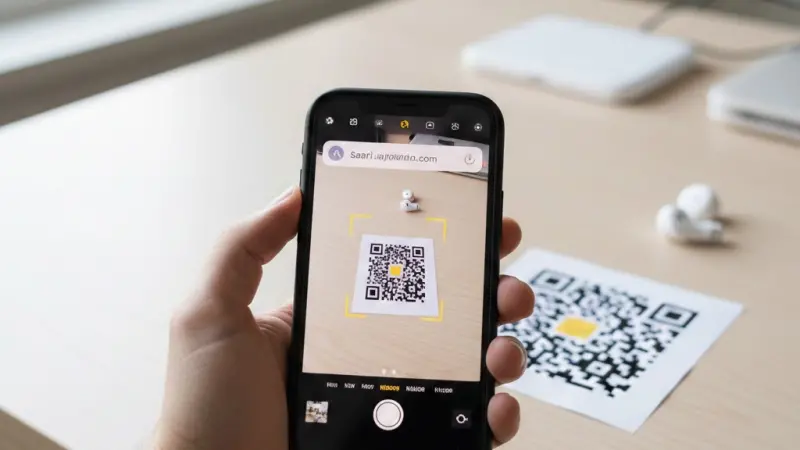
The most common way a customer in a London cafe or a Belfast hardware store will engage with your business is through the native Camera app. This requires no additional downloads and works instantly from the lock screen. To scan, the user simply opens the Camera, ensures the rear-facing lens is selected, and points it at the code. A yellow frame and a floating link appear immediately.
Leveraging the Control Centre Code Scanner Utility
For more frequent users, Apple provides a dedicated "Code Scanner" tool. Unlike the camera, this tool is specifically optimised for reading codes and will automatically open links within a secure in-app browser rather than diverting to Safari. For UK businesses in professional services, recommending this tool to clients can provide a more streamlined and professional user experience.
Maximising Scanning Efficiency in Busy Retail Environments
In high-traffic areas like Manchester’s Arndale or Birmingham’s Bullring, lighting can be inconsistent. Advise your staff that if a QR code isn't scanning, a quick tap on the iPhone screen to focus the lens, or using the flashlight toggle (available within the scanning interface), usually resolves the issue instantly.
Why QR Adoption is Surging Among UK Small Businesses in 2026
The UK business population, currently standing at approximately 5.6 million private sector enterprises, is increasingly turning to QR technology to combat rising operational costs. In 2026, the primary driver isn't just novelty; it's the necessity of providing contactless, high-speed service to a consumer base that demands immediacy.
Improving Customer Engagement Through Contactless Interaction
Recent data from Ofcom indicates that 76% of UK consumers research local businesses online before purchasing. A QR code placed in a shop window in Cardiff or Edinburgh allows that research to happen even when the physical store is closed. By scanning a code, a potential customer can view a portfolio, check stock levels, or book an appointment without needing to speak to a representative immediately.
Streamlining Payments and Reducing Transaction Friction
With the Financial Conduct Authority (FCA) supporting more open banking initiatives, QR codes are now a primary method for "Scan to Pay." This is particularly prevalent amongst UK tradespeople. Instead of carrying a card terminal, a plumber in the Midlands can present a QR code that initiates a secure bank-to-bank transfer via the customer’s iPhone, often resulting in lower transaction fees compared to traditional card processing.
UK small businesses contribute £2.3 Trillion to the annual national turnover, with digital-first micro-businesses showing the highest growth rates in 2025.
Technical Requirements for Business-Ready QR Codes
If you are a business owner intending to generate codes for your customers to scan, there are specific technical standards you must adhere to. A poorly designed code that an iPhone cannot read will frustrate customers and potentially drive them to a competitor.
Optimal Sizing and Contrast for iOS Recognition
Apple’s scanning algorithm requires a certain level of "quiet zone" (white space) around the QR code to distinguish it from surrounding text or graphics. For a business card, a code should be at least 2cm x 2cm.
For signage in a Welsh tourism spot or a Scottish distillery, the code needs to be significantly larger to allow scanning from a distance of several metres.
Dynamic vs Static QR Codes: Making the Right Choice
Static codes contain fixed information, such as a website URL. However, 2026 best practices suggest using Dynamic QR codes. These allow you to change the destination URL without printing new materials. For example, a restaurant in Northern Ireland can use the same QR code on every table but change the digital menu from breakfast to lunch via their management software.
Validating Your Links with HMRC and ICO Standards
Ensure that any QR code linking to a payment portal or a data collection form is compliant with Information Commissioner's Office (ICO) guidelines. UK consumers are increasingly wary of "quishing" (QR phishing). Using branded short-links within your QR code helps build trust by showing the customer exactly where the iPhone is taking them.
Regional Considerations for QR Implementation Across the UK
While the technology is the same, the application of QR codes can vary significantly depending on your specific region and local regulations. Adapting your strategy to the local context is essential for maximum impact.
Bilingual Requirements for Businesses in Wales
In Wales, businesses often find success by ensuring that the digital content linked via a QR code is available in both English and Welsh. Business Wales offers mentorship for companies looking to integrate bilingual digital services, which can significantly improve customer sentiment and compliance with the Welsh Language Standards in certain sectors.
Cross-Border Trade and the Windsor Framework in Northern Ireland
For businesses in Northern Ireland, QR codes are becoming a vital tool for managing the complexities of the Windsor Framework. If you are moving goods, QR codes can be used on packaging to link directly to digital customs declarations or origin certificates, facilitating smoother trade with both the Republic of Ireland and Great Britain.
Scottish Enterprise and Localised Digital Support
Scottish businesses can tap into "Scottish Enterprise" grants specifically designed for digital transformation. If you are a micro-business in the Highlands or Islands, using QR codes for digital "trail maps" or local history guides can enhance the tourist experience, providing value that physical brochures cannot match due to distribution costs.
Security and Privacy: Protecting Your Customers from Quishing
As QR codes become more ubiquitous, so do security threats. In 2026, the term "Quishing" (QR Phishing) has entered the common lexicon of the UK's National Cyber Security Centre (NCSC). As a business owner, you have a duty of care to ensure the codes you present are secure.
Identifying and Preventing QR Code Tampering
In public spaces, such as bus shelters in Leeds or parking meters in Bristol, criminals have been known to paste their own QR codes over legitimate ones. Businesses should regularly inspect their physical QR placements. If you use QR codes for payments, ensure they are behind glass or on high-quality vinyl that shows obvious signs of tampering if disturbed.
Data Protection and the ICO: What You Need to Know
When a customer scans a code that leads to a sign-up form, you are collecting personal data. Under the UK GDPR, you must be transparent about what data is being collected. Ensure your landing page includes a clear link to your Privacy Policy. In 2025, the ICO increased spot-checks on SMEs regarding their digital data collection methods, so compliance is non-negotiable.
Pro Tip: Always use a SSL-certified (HTTPS) destination for your QR codes. iPhone’s Safari browser will show a "Not Secure" warning for HTTP links, which will cause 85% of UK users to immediately abandon the scan.
Creative Marketing Strategies Using QR Codes in 2026
Beyond simple menu viewing, UK businesses are finding innovative ways to use the iPhone's scanning capabilities to drive revenue and build community loyalty.
Interactive Shop Windows for 24/7 Sales
Retailers in high-street locations across England and Wales are using QR codes to turn their shop windows into interactive kiosks. Even when the doors are locked, a passerby can scan a product in the window and be taken directly to a checkout page on their iPhone, with the option for "Click and Collect" the following morning.
Building Social Proof Through Instant Reviews
Since 68% of UK customers trust online reviews as much as personal recommendations, making the review process easy is critical. Place a QR code on your "thank you" cards or at the bottom of
receipts that links directly to your Google Business Profile or Trustpilot page. A quick scan while the positive experience is fresh can significantly boost your local search ranking.
Advanced Features: App Clips and NFC Integration
For more tech-savvy businesses, especially in the hospitality and transport sectors, Apple's "App Clips" are the next evolution of the QR code experience. This allows a user to access a small part of your app without downloading the full version.
Reducing the Barrier to Entry with App Clips
Imagine a customer at a bike-rental stall in Glasgow. Instead of downloading a 100MB app, they scan a specific Apple-designed QR code. A small card slides up from the bottom of their iPhone, allowing them to pay via Apple Pay and unlock the bike in seconds. This reduces "app fatigue" and increases conversion rates.
The Synergy Between QR Codes and NFC Tags
While QR codes require the camera, NFC (Near Field Communication) tags allow for "Tap to Scan" interactions. Many UK businesses now use both. A QR code for visibility, and an NFC tag hidden behind the sign for those who want an even faster experience. This dual-approach ensures your business remains accessible to all iPhone models from the last five years.
"Siri, how do I scan a QR code?"
On any modern iPhone, simply open the Camera app and point it at the code. If that doesn't work, ensure "Scan QR Codes" is enabled in your Camera settings or use the dedicated Code Scanner in your Control Centre.
"Is scanning a QR code safe on my iPhone?"
Generally, yes. iOS provides a preview of the link before you click it. However, always check that the URL looks legitimate and matches the business you are visiting. Avoid scanning codes on stickers that look like they've been pasted over original signage.
Common Troubleshooting Steps for UK Business Owners
When a customer tells you "it's not working," being able to provide immediate, helpful advice can save a sale. Most iPhone scanning issues are related to simple settings or physical obstructions.
Verifying Camera Settings and iOS Updates
Ensure the customer is running at least iOS 17 or 18. In some cases, the "Scan QR Codes" toggle in Settings > Camera might have been accidentally turned off. A quick check of this setting solves 90% of "non-responsive" camera issues.
Dealing with Physical Factors: Distance and Glare
The "sweet spot" for an iPhone to read a QR code is usually between 10cm and 30cm for small codes. If your shop has high-gloss windows, glare from the sun can wash out the code.
Suggesting the customer angles their phone slightly can break the reflection and allow the sensor to register the black-and-white pattern.
Future-Proofing Your Business for 2027 and Beyond
The trajectory of QR technology in the UK is moving towards deeper integration with the "Internet of Things" (IoT). Businesses that master the basic "scan to link" today will be better positioned for the "scan to interact" world of tomorrow.
Sustainability and the Reduction of Printed Materials
With the UK government's focus on Net Zero, reducing paper waste is a corporate responsibility. By replacing physical brochures with QR-linked PDFs, a small business in Bristol or Newcastle can save hundreds of pounds in printing costs annually while appealing to the 54% of UK Gen Z consumers who prioritise eco-friendly businesses.
The Role of QR in Supply Chain Transparency
For UK food and beverage producers, QR codes are becoming a tool for "farm-to-fork" transparency. A customer scanning a steak in a Welsh butcher's shop can see the exact farm of origin, the date of processing, and even the carbon footprint of the transport. This level of data transparency is becoming a major competitive advantage in the premium retail sector.
Boost Your Local Visibility Today
Ready to put your business on the map? Join thousands of UK SMEs who use LocalPage.uk to connect with their community. Create your listing and generate your first business QR code today.
Get Your Free Business Listing
Frequently Asked Questions
1. Do my customers need a special app to scan my business QR code?
No. On any iPhone running recent versions of iOS (13 through to 19), the camera app has built-in QR recognition. Users simply point their camera at the code, and a link appears. This ease of use is why 71% of UK smartphone users are comfortable using QR codes in their daily shopping.
2. How can I tell if a QR code is a scam?
When scanning with an iPhone, a preview of the URL appears above the code. Always check if the domain matches the business. For example, if you're at a UK council car park, the link should ideally be a .gov.uk or a recognised payment provider like RingGo. Be wary of random character URLs or suspicious stickers.
3. Why won't my iPhone scan a QR code in a dark restaurant?
iPhone cameras need contrast to read the code. In low-light environments, such as a dim pub in Edinburgh, the camera may struggle. You can tap the "Flash" icon or use the dedicated Code Scanner tool in the Control Centre, which is specifically designed to handle low-light conditions more effectively than the standard camera app.
4. Can I scan a QR code that is saved in my iPhone's Photos gallery?
Yes. If someone sends you a QR code via WhatsApp or you take a screenshot, open the photo in the Photos app. Long-press on the QR code within the image, and iOS will use "Live Text" to recognise the link and offer to open it in Safari. This is a very useful tip for UK businesses sharing promotional codes via social media.
5. Is there a limit to how much information a QR code can hold?
While QR codes can technically hold up to 4,296 characters, the more data you add, the more "complex" and "dense" the pattern becomes. For business use in the UK, it is best to keep it simple—link to a short URL that then redirects to your full content. This ensures even older iPhones can scan the code quickly.
6. Does it cost money for a UK business to create a QR code?
Generating a basic "Static" QR code is free through many online tools. However, for "Dynamic" codes—which allow you to track scan data or change the link later—there is often a small monthly fee. For most UK micro-businesses, the free version is sufficient for simple website linking.
7. Are QR codes still used for NHS check-ins or COVID-related tracking?
In 2026, the specific pandemic-era mandates have long ended. However, the infrastructure remains. Many NHS trusts and private clinics in England and Wales still use QR codes for "digital check-in" to reduce reception queues and improve administrative efficiency, proving the long-term utility of the technology.
8. What is the difference between a QR code and a Barcode?
A standard barcode (1D) only holds data horizontally and is typically used for stock-keeping (SKUs). A QR code (2D) holds data both horizontally and vertically, allowing it to store significantly more information, such as complex URLs, contact cards (vCards), or even Wi-Fi login credentials.
9. My business is in a rural part of Wales with poor 4G/5G. Will QR codes work?
The code itself will scan, but if the link requires an internet connection to load a website, it will fail. In rural areas, consider using QR codes to provide
offline information, such as a vCard that saves your phone number directly to the customer's iPhone, which does not require an active data connection.
10. Can I custom-brand my QR code with my company logo?
Yes, QR codes have a high "Error Correction" level, meaning up to 30% of the code can be obscured or modified while remaining scannable. Many UK brands now integrate their logo into the centre of the code or use their brand colours (ensure high contrast) to make the code look more professional and trustworthy.
Disclaimer: The information provided in this article is for general informational and research purposes only. Company details, features, services, and market positions may change over time. Readers are advised to visit official company websites and conduct independent research before making any business decisions or purchasing services.
Most Searchable Keywords
Recent Blogs

Related Listings


Categories
- Accountants (295)
- Advertising Agencies (559)
- Architects (149)
- Automobiles (377)
- Beauty (300)
- Carpenters (146)
- Cleaning Services (387)
- Dentists (189)
- Driving (62)
- Education (1)
- Electricians (215)
- Energy (8)
- Event Organiser (689)
- Finance (602)
- Guide (3492)
- Health (2207)
- Information technology (207)
- Legal Services (361)
- Logistics (6)
- Maintenance (65)
Sponsored Listings in Painters

Related Blogs

Creamfields Daresbury: Impact on Local Reside...
Read this insightful article "Creamfields Daresbury: Impact on Local Residents" to expand your knowledge!
UK High Street Businesses in 2026-27: Which S...
Read this insightful article "UK High Street Businesses in 2026-27: Which Sectors Are Growing?" to expand your knowledge!

Why Complete Business Listings Matter More Th...
Read this insightful article "Why Complete Business Listings Matter More Than You Think" to expand your knowledge!
Questions & Answers – Find What You Need, Instantly!
Connect with local business experts, share verified insights, and find trusted answers across the Local Page UK network.
Ask Community
Ask questions to the Local Page UK community
Share Knowledge
Share your knowledge to help out others
Find Solutions
Find answers or offer instant solutions
Some of the most popular fantasy TV shows include "Game of Thrones," known for its epic battles and political intrigue, "The Witcher," which features monster hunting and magic, and "Stranger Things," blending supernatural elements with 1980s nostalgia. Other notable mentions are "His Dark Materials," "Shadow and Bone," and "The Mandalorian," each offering unique worlds and captivating storytelling that have garnered large fan bases.
When seeking bathroom renovation providers that handle both plumbing and tiling, it's advisable to look for licensed contractors who specialize in comprehensive bathroom remodels. Companies such as Home Depot, Lowe's, and Bath Fitter offer these services, often providing a seamless experience by managing all aspects of the renovation process. Additionally, local contractors with positive reviews in platforms like Angie's List or Houzz may also offer tailored solutions for your bathroom needs.
Absolutely, there are several distributors that supply crash mats and soft play equipment to gymnastics clubs in and around Birmingham. National companies like Gymnova, S & G (Spieth Gymnastics), and Jaques of London offer a wide range of crash mats, foam pits, and soft play pieces, and they typically deliver to the Birmingham area. For more local options, you might try The Gym Equipment Company, which has a showroom in the West Midlands, or check out smaller specialist suppliers like Playtime UK. Many of these distributors cater specifically to clubs, offering high-density foam mats that meet safety standards. I'd recommend reaching out to a few to compare pricing, delivery times, and whether they offer custom sizes or installation services. It's also worth checking if any of them have a physical showroom near Birmingham so you can test the equipment before buying. Happy tumbling!
For professionals seeking a reliable sanitaryware supplier in Manchester with trade account facilities, several established merchants combine extensive product ranges, competitive pricing, and dedicated trade support. The most reputable option is Graham Plumbers Merchant, which operates multiple branches across Manchester, including Salford Quays and Oldham. They offer a dedicated trade account service with preferential pricing, priority delivery scheduling, and access to a vast inventory of leading sanitaryware brands such as Villeroy & Boch, Duravit, Ideal Standard, and Roca. Their trade accounts typically include net 30-day payment terms, online account management, and a tailored project quotation system. Similarly, City Plumbing Supplies has several Manchester-based depots (such as Ashton-under-Lyne and Stockport) that cater specifically to trade customers, providing a rapid order-and-collect service, trade-only promotions, and a loyalty programme offering rebates on repeat purchases. Their product range covers everything from basins and WCs to complete bathroom suites and brassware, with in-house technical advisors available for specification support. Another key player is Plumb Center, part of the Wolseley Group, which offers trade accounts with bespoke pricing structures, direct-to-site deliveries within the Greater Manchester area, and access to over 10,000 lines of sanitaryware, including premium brands like Grohe and Hansgrohe. Their trade portal allows for real-time stock checking and order history tracking, facilitating efficient project management. For those seeking a more specialist or high-end option, Bathroom Spares in Manchester provides trade accounts with a focus on hard-to-find sanitaryware and discontinued ranges, which can be invaluable for refurbishment projects. Additionally, independent merchants such as M&B Plumbase in Trafford Park offer flexible trade terms, personalised service, and competitive pricing on both mainstream and luxury sanitaryware. When evaluating suppliers, trade customers should consider factors beyond price: reliability of stock availability, delivery timescales within Manchester’s often congested zones, clarity of returns policies, and the quality of after-sales support for warranty claims. It is advisable to request a trade account application from at least two to three suppliers to compare discounts, minimum order values, and payment terms. Many suppliers also offer showroom access for trade clients, allowing you to inspect finishes and dimensions before committing to large orders. For ongoing projects, establishing a relationship with a single supplier who offers consolidated invoicing and dedicated account management can streamline procurement. Ultimately, the most reliable supplier for your trade account in Manchester will be one that aligns with your volume requirements, preferred brands, and service expectations, so a site visit to their local branch and a discussion about your specific trade needs is highly recommended before committing to an account.
People in Leeds are loving their local florists—customers often mention gorgeous, fresh arrangements and super friendly service. Many rave about reliable same-day delivery and creative wedding bouquets. A few note pricing can vary, but overall, the buzz is all about quality and that personal touch making every order feel special.
Common problems for commercial gardening in Bristol include weed overgrowth, soil degradation, pest infestations, and irrigation malfunctions. Additionally, managing seasonal transitions, adhering to sustainability regulations, and maintaining consistent aesthetics pose significant challenges. Expert services mitigate these via structured maintenance, integrated pest management, and soil analysis to ensure long-term landscape health.